


What to know about Redlands' two-year budget and $85M financing
Council approves spending plan that funds major public safety projects, anticipates Good Nite Inn acquisition and calls for further analysis of Fire Stations 265 and 266.

REDLANDS, Calif. — The Redlands City Council on June 16 adopted a two-year budget for fiscal years 2027 and 2028 and, minutes later, authorized a financing package of up to $85 million to fund long-term infrastructure projects.
Redlands runs on a July-to-June fiscal year and adopts a budget in two-year cycles; the last one, covering fiscal years 2025 and 2026, was approved in June 2024. As with that plan, the city's spending priorities remain fixed on high-cost infrastructure.
In his budget letter, City Manager Charles Duggan Jr. said the city is entering a tougher financial stretch after several boom years. Property tax growth has slowed to roughly 4% a year and general sales tax growth has flattened to between 1% and 2%, a downshift from the gains the city saw in the years after the COVID-19 pandemic.
Revenue from Measure T, the local sales tax voters approved in 2020, has stayed around $20.5 million a year rather than climbing with inflation and the city's continued growth. At the same time, the city is absorbing rising costs tied to labor agreements, inflation and the debt payments coming due on its big capital projects.
Duggan framed the plan as a long-term reinvestment in the city's aging public facilities, including a new police station, the relocation of Fire Station No. 264 and the library's HVAC replacement, alongside the planned acquisition of the Good Nite Inn transitional housing site.
Staffing levels stay nearly unchanged. A few positions were approved for the coming year, Duggan said, but departments had to absorb the cost, so the budget adds no new spending for additional employees.
He cautioned toward restraint based on current economic trends.
"Much of the unusually strong revenue growth experienced over the last several fiscal years, particularly in economically sensitive revenues such as sales tax, has begun to moderate toward more normalized historical trends," he wrote.
Inflation, meanwhile, has driven up operating costs tied to labor, infrastructure upkeep and the city's expanded services and facilities.
The budget passed 4-0, with Council member Eddie Tejeda making the motion and Council member Denise Davis seconding. Mayor Pro Tem Marc Shaw was absent.
How the financing works
The financing, approved in a separate vote right after the budget passed, lets the city issue certificates of participation not to exceed $85 million – a tool California cities lean on regularly to pay for big infrastructure projects.
The largest slice would go to the new police station, the Redlands Public Safety Hall, at roughly $58 million. The relocation of Fire Station No. 264 accounts for about $15 million, and the library HVAC work about $1.5 million. The city expects the amount it actually borrows to land closer to $75 million.
Annual debt service is estimated at about $5 million starting in fiscal 2029, once construction wraps, with total payments over the life of the financing projected at roughly $142.9 million including principal and interest.
On top of the borrowed money, the city plans to put in about $20 million in cash toward the police facility, plus roughly $500,000 from development impact fees, bringing the police project alone to an estimated $78 million.
That price tag puts Redlands in line with other Inland Empire cities building new police facilities. Rialto broke ground in 2024 on a roughly $83 million station, financed largely through lease revenue bonds with about $26 million in city equity. Riverside, meanwhile, has budgeted $62 million for a new downtown police headquarters set to begin construction this year, up from an initial $59.5 million estimate.
Fire staffing plan expected in January
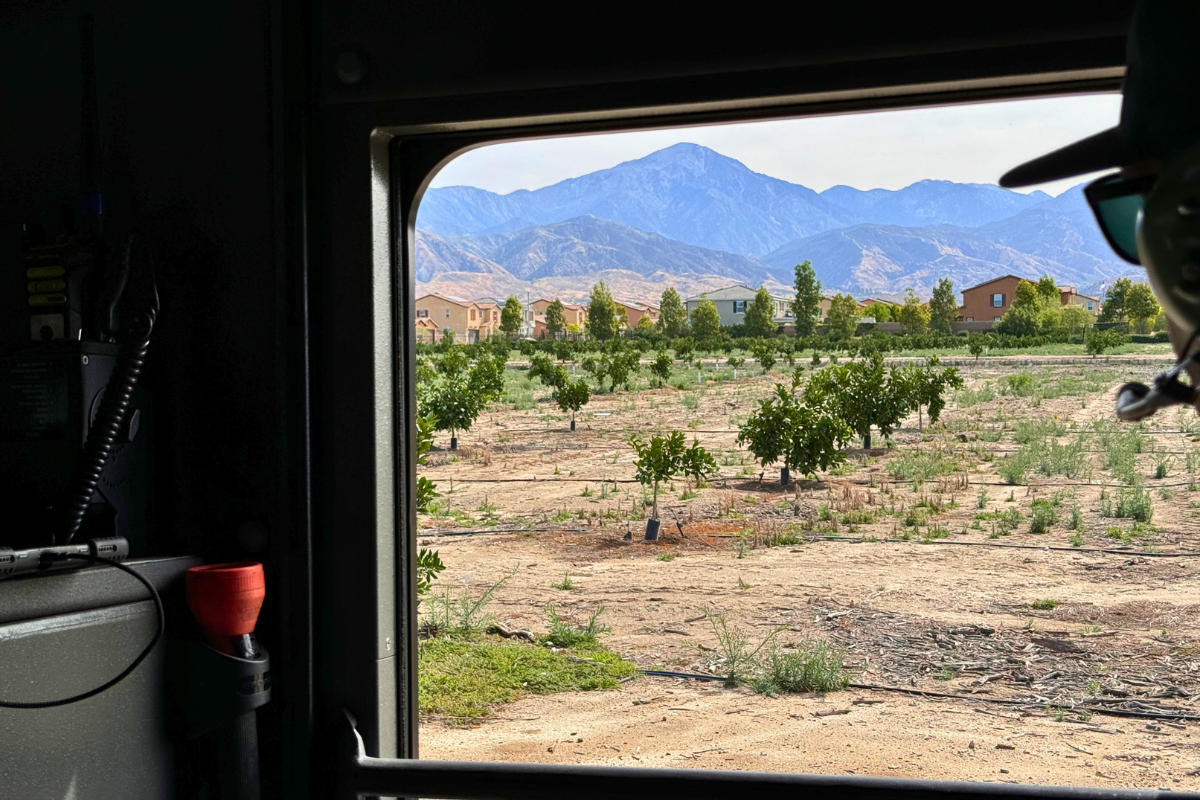
At the council's previous meeting, Davis pushed for additional public safety funding, particularly for staffing in the Redlands Fire Department.
During that meeting, Davis referenced a recent report on the department's call volume and said emergency calls have increased substantially over the past two decades while frontline staffing has remained largely unchanged. Fire Chief Rich Sessler has said the department has not grown since the 2000s and that the recurring cost of personnel is the central obstacle to adding staff.
On June 16, Duggan told the council that staff will return in January with recommendations on additional fire personnel and on the planning, construction and staffing of Fire Stations 265 and 266. The city's approach all along, he said, was to lock in design and funding for the police station and relocation of Fire Station No. 264 first, then turn to additional fire stations.
"The fire chief has also brought to me a plan to potentially add some paramedics," Duggan said. "And so I've committed to the council to do all the analysis we need to bring back recommendations to you in January."
New positions slated for the second year of the budget weren't built into the current spending plan, Duggan said, but remain "in the mix" as staff look for funding.
Davis said she was encouraged by the timeline.
"I'm really excited to see the capital improvements moving forward with our police station, our Fire Station 264, and I very much look forward to the January meeting and making sure that we fund Station 265 for the fire department and have that staffed adequately," she said.
What didn't make the cut
Not every request fit within the budget. The city deferred or left unfunded a list of 27 department needs, noted on page 16 of the budget report.
Among the deferred items are a proposed pump track at the city skate park, fencing and door improvements at Prospect Park's Sewell Theatre, and security fencing at the Redlands Bowl.
The Fire Department's unfunded requests are notable given the night's discussion of staffing: they include six additional firefighter-paramedics for a new paramedic squad, a drone program for incident response, and a fuel island at Fire Station 263.
Other unfunded needs span citywide playground and restroom renovations, library repairs and a bookmobile, roof replacements across several public buildings, upgraded police communications equipment, and the replacement of 65 city vehicles. A full list appears on page 16 of the budget.
Acquisition of the Good Nite Inn housing facility
The budget also anticipates the city's acquisition of the Good Nite Inn transitional housing facility through a partnership the city says is substantially funded by state and county resources. The site currently houses people experiencing homelessness through interim and supportive housing, and the city says buying it will help keep those services running while stabilizing the operation long term.
The acquisition follows uncertainty over the property's ownership. In 2024, Community Forward Redlands reported that Shangri-La Industries, the Los Angeles developer involved in the Good Nite Inn Homekey conversion project, entered court-appointed receivership amid allegations of financial misconduct. City officials said at the time that housing programs would keep operating despite the developer's troubles.
Museum of Redlands
Another new cost on the city's books is the Museum of Redlands, budgeted at roughly $389,169 in fiscal 2027 and $395,210 in fiscal 2028, after a 12-month estimate of about $296,008 for the current year. The biggest drivers are special contractual services, janitorial services and utilities according to the budget's General Fund detail.
The council's next regular meeting is scheduled for July 7.
