


Redlands fire calls rise as staffing remains largely unchanged
As Redlands grows, firefighters say emergency response infrastructure is struggling to keep pace

The Redlands Fire Department is responding to more emergency calls than ever before.
The department is on track to handle nearly 12,000 calls in 2026, a sharp increase from a decade ago, even as the number of frontline firefighters has remained the same.
Now, firefighters and city officials alike say Redlands faces a growing challenge: how to keep emergency response times from slipping as new homes, warehouses and commercial centers continue to spread across the city’s north side.
“The city is growing at an alarming rate, and we are the exact same size,” said Capt. Matt Swenson, president of the Redlands Professional Firefighters Association. “We’re coming to you on your worst day and we want to be able to be there. Currently, it’s very, very difficult to do that — to keep that promise.”
The Redlands Fire Department aims for a response time of five minutes and currently reaches that benchmark about 70% of the time, according to city data.
Department officials say geography and overlapping calls can make that difficult.
During a recent ride-along with crews at Redlands Fire Department Station No. 3, which handles many calls on the city’s north side, Community Forward Redlands observed firsthand the unique role each station plays and the challenges firefighters face.
“The calls don’t stop,” Swenson said, noting that firefighters are frequently handling multiple incidents simultaneously, leaving gaps in coverage when units are committed to lengthy calls.
“Half of the time, we’re running multiple calls at once,” Swenson said. “Depending on the call, units can be tied up for more than an hour.”
But in an emergency, seconds matter.
“There’s a knot in your stomach when there’s a drowning or CPR call,” Swenson added.
With more growth on the horizon, as new commercial centers and housing developments break ground, those challenges will increase, Swenson said.
Growth and wildfire risk add new pressure
The city of Redlands currently has more than 3,090 housing units proposed, approved or under construction, according to the city's major development projects list. The vast majority of these developments are located north of I-10 between Wabash Avenue and I-210.
This does not include the 700 units approved for the former Redlands mall before the project changed ownership.
In addition to residential and commercial growth, Redlands is also facing an expanding wildfire risk. Firefighters said wildfire preparation has become an increasingly important part of the department’s long-term planning.
Updated state fire hazard maps released in 2025 show wildfire danger extending beyond the canyon communities in south Redlands into larger portions of north Redlands.
While structure fires remain the public image of the fire service, firefighters and city officials said the vast majority of calls are now medical emergencies. Redlands Fire Chief Rich Sessler estimated medical calls account for roughly 70% to 80% of department responses.
Four Redlands fire stations
Across Redlands, the city’s four fire stations reflect both decades of growth and the strain firefighters say comes with trying to keep pace.
This map shows the city's current fire department infrastructure as of May 2026. Red fire truck symbols denote current fire stations. Red and black buildings signal proposed fire stations.
At Fire Station No. 2 near Garden Street, the city recently completed a renovation and expansion project, modernizing a station firefighters said had outgrown its original footprint years ago. The remodel added dorm space, storage and updated facilities for crews.
Before the renovation, firefighters said turnout gear hung in the apparatus bay and crews slept in cramped shared quarters. Having a dedicated space for turnout gear is important to the health and safety of firefighters to avoid unnecessary exposure to fire chemicals.
At Station No. 3 in north Redlands, firefighters pointed to dorm rooms they built themselves roughly a decade ago between emergency calls in order to create privacy and accommodate future co-ed staffing.
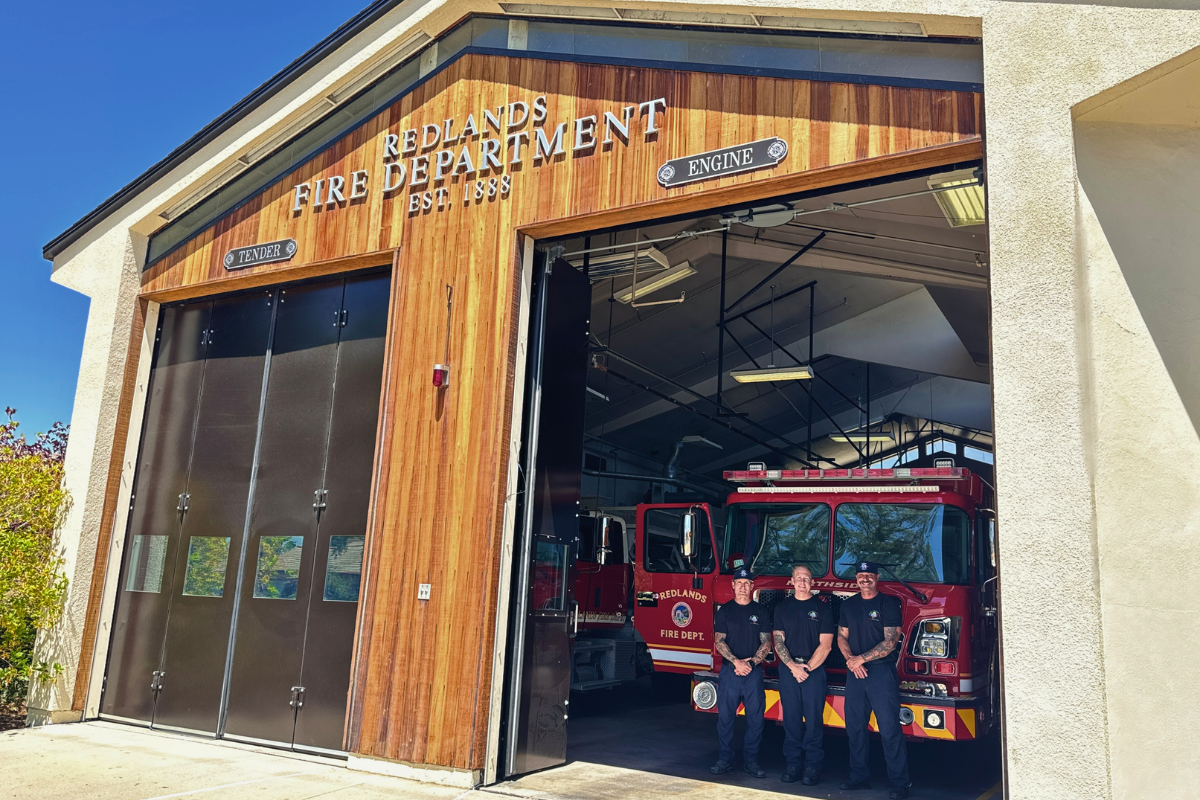
Meanwhile, Fire Station No. 4 off Park Avenue continues operating out of a temporary modular facility originally intended to last only a few years after structural problems forced firefighters from their previous station more than 15 years ago.
Station No. 4 is the city’s busiest firehouse, responding not only to residential emergencies but also to calls at shopping centers, warehouses and skilled nursing facilities throughout the area.
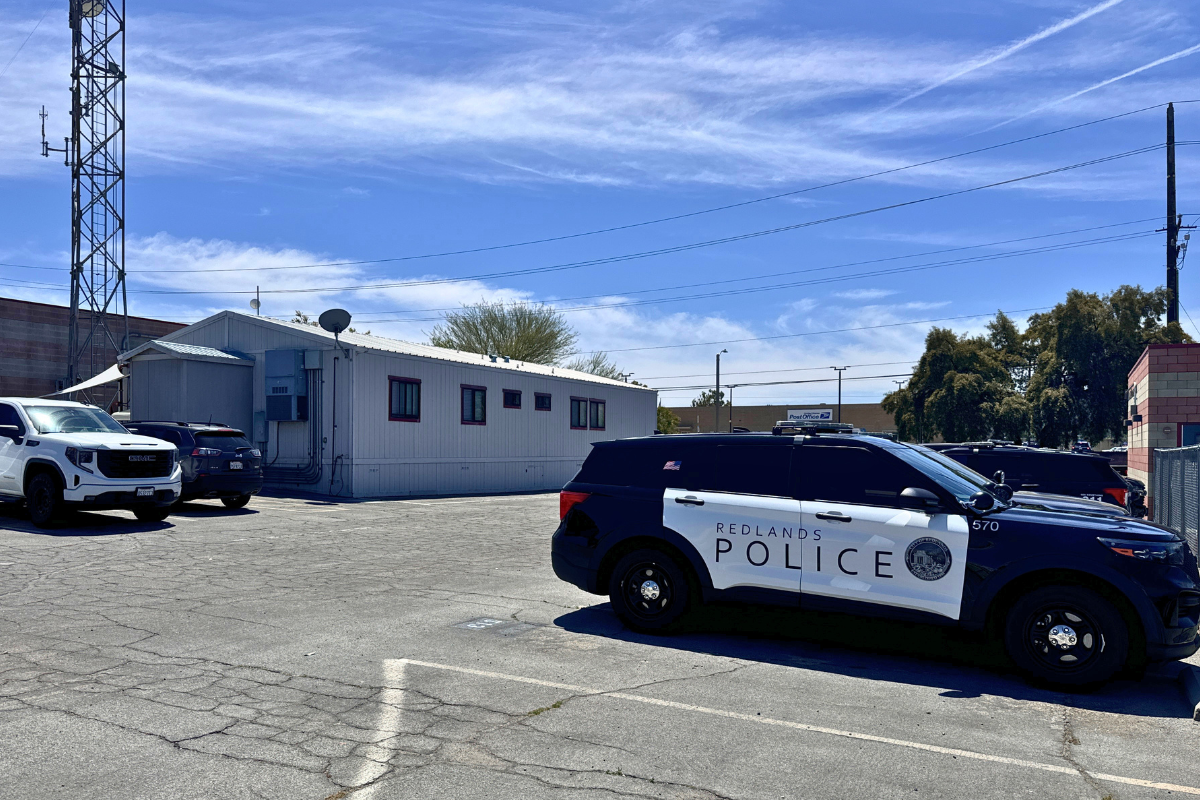
The station’s layout creates additional operational challenges. Dorm rooms are detached from the apparatus bay, forcing crews to go outside across a parking lot to reach engines during overnight calls.
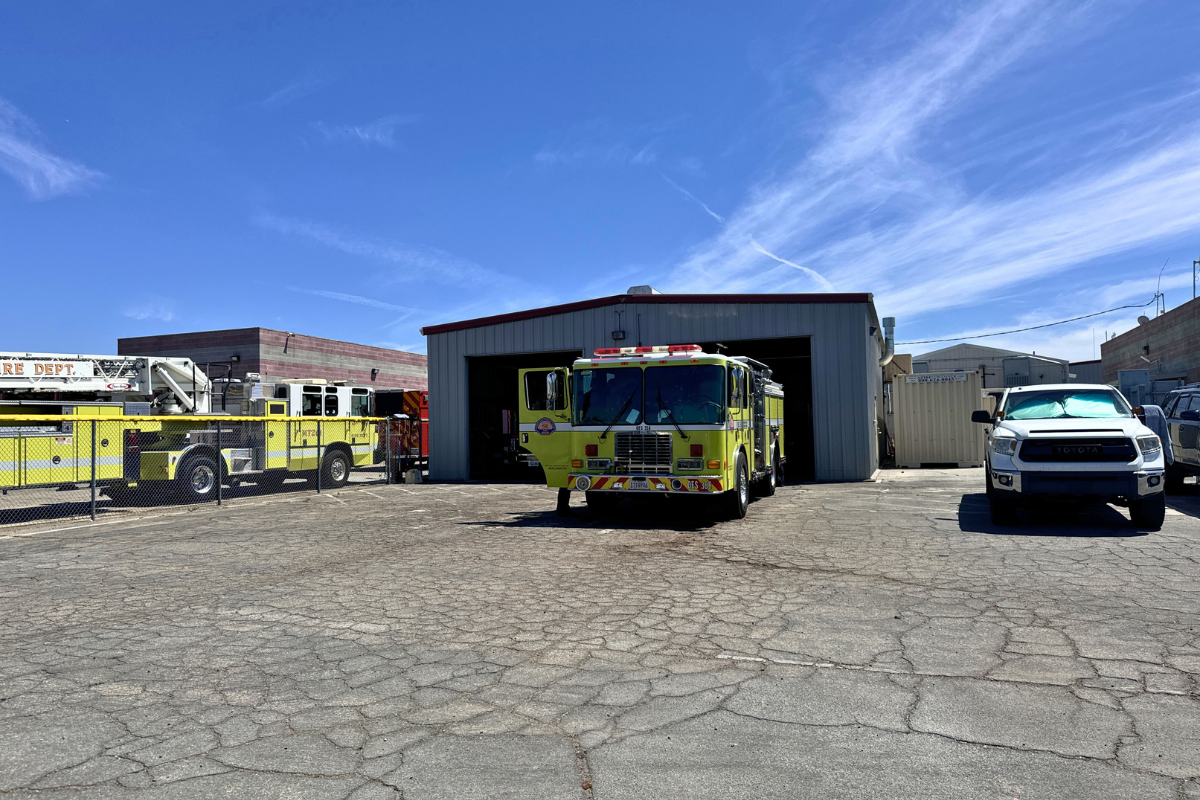
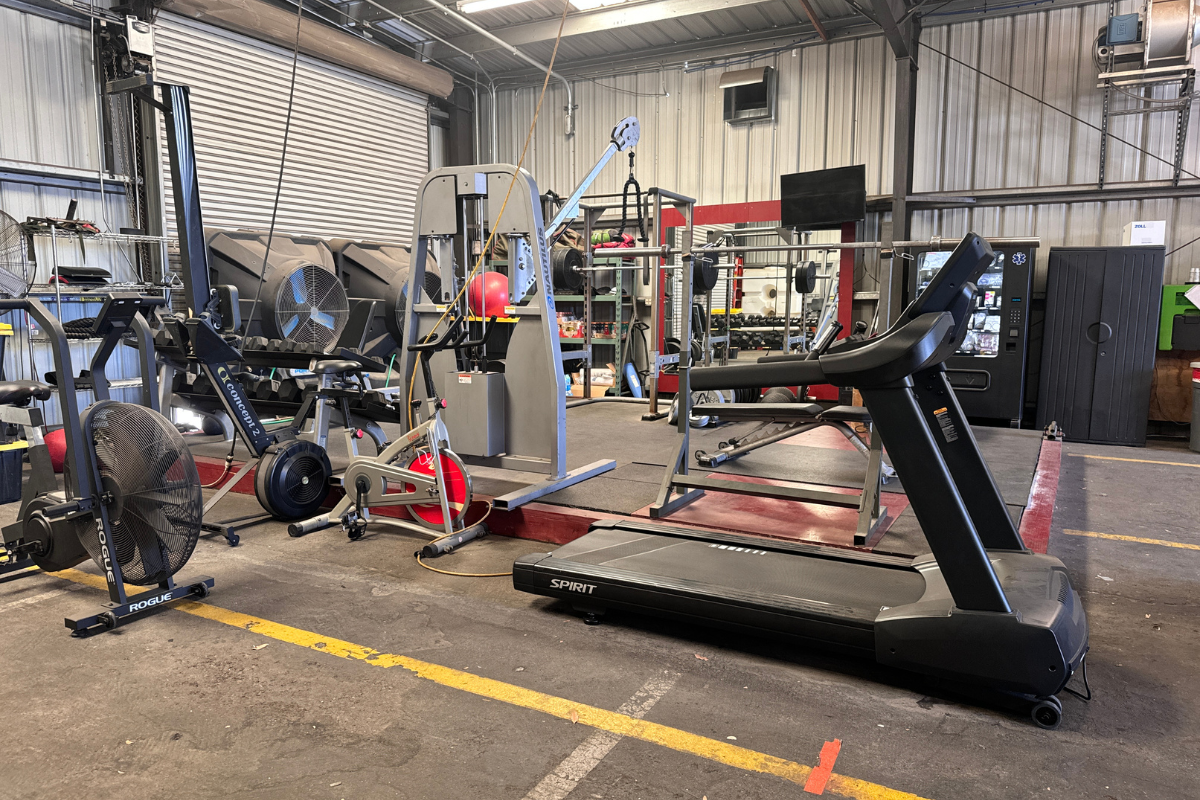
Despite the aging temporary facility, firefighters said the department has maintained strong retention and morale.
“It’s a testament to the culture here,” said one firefighter during a visit to Station No. 4.
Firefighters said the close-knit culture of the department is shaped in part by the amount of time crews spend together inside the stations.
Most Redlands firefighters work 24-hour shifts on a rotating schedule that keeps crews together for extended periods throughout the month.
Firefighters said station life often becomes an important outlet after difficult calls, especially when crews are processing traumatic incidents involving CPR attempts, fatalities or serious injuries.
Crew members often spend as much time together as they do with their own families.
“A minimum of a third of my life this year is with these guys,” Swenson said of his crew at Station No. 3. “They’re going to see me just as much as my family sees me.
Fire chief echoes need for staffing, resources
Officials say new stations are planned, but acknowledge that construction and staffing expansion take years.
“We haven’t grown. We’ve stayed the same since the 2000s,” Fire Chief Rich Sessler said in an interview with Community Forward Redlands on May 5.
The department currently has 60 sworn personnel, including command staff, with 19 firefighters assigned to daily emergency response operations across four stations. The department is recruiting for two vacancies for firefighter-paramedics.
In addition to building a permanent Station No. 4, Sessler said there are plans for two new fire stations, one near Almond Avenue and California Street and another near Judson Street and Lugonia Avenue.
However, it’s unclear when those stations will be built.
“We’re actively having discussions on increasing staffing,” Sessler said. “The challenge is the recurring cost of personnel. We’re trying to find funding for that.”
According to Sessler, adding two additional stations would push the five-minute response goal into the 90% range.
City budget planning addresses Station 4, not staffing
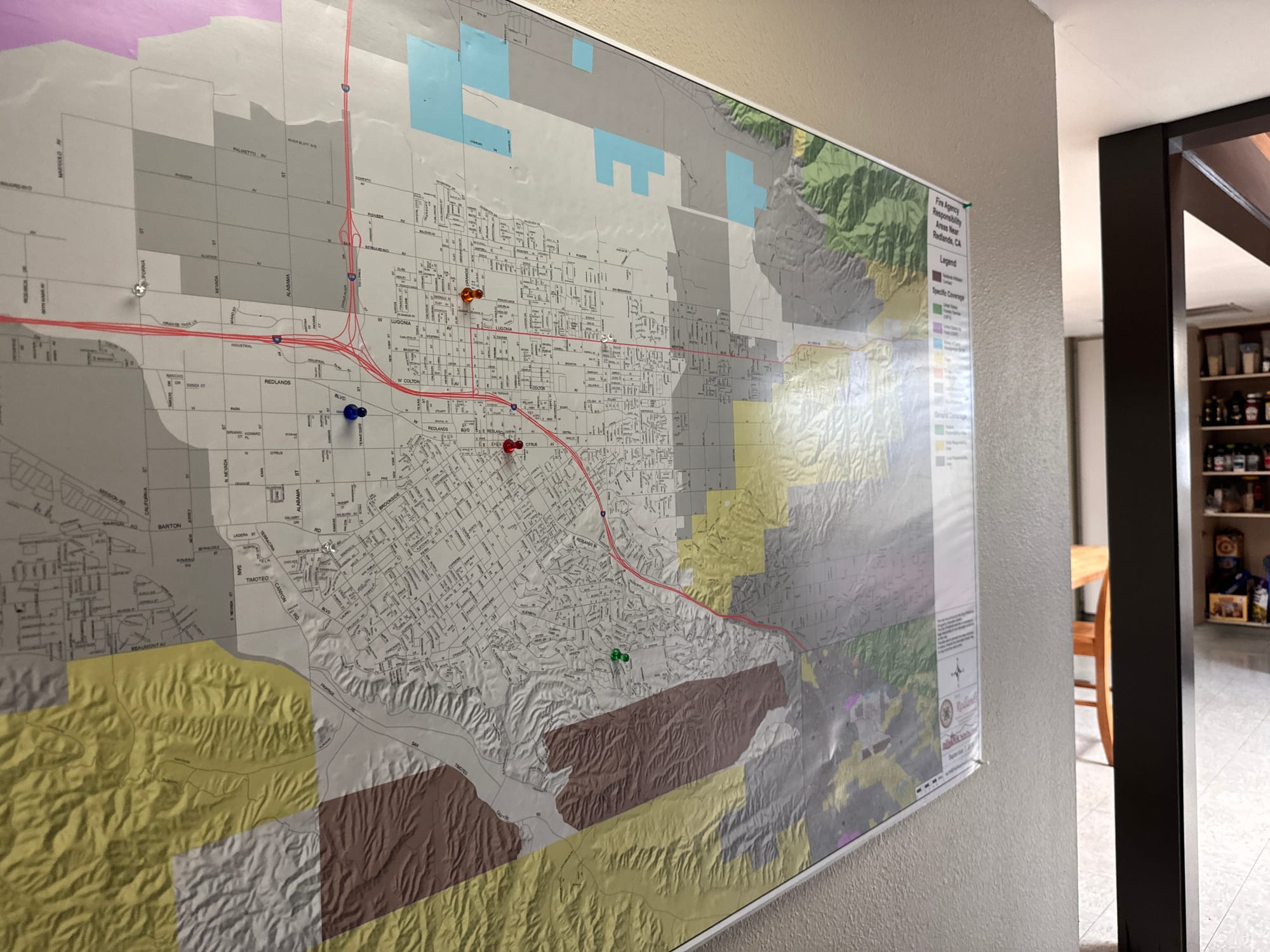
During a recent City Council budget workshop, City Manager Charles Duggan said city officials are now trying to determine how Redlands can afford not only additional fire stations, but the staffing and equipment needed to operate them.
“The fire chief came to me with a good plan,” Duggan said during the May budget workshop. “Our plan is to figure out how we can afford to build, equip and staff at least one new fire station, maybe two,” Duggan said.
Duggan said city officials have discussed potentially hiring six firefighter-paramedics in advance of opening a future station, using existing space temporarily while the city develops long-term expansion plans.
However, he said the ongoing cost of staffing remains a major challenge.
“A six-person crew would be about $1.3 million,” Duggan said. “That doesn’t include the equipment for them.”
According to Duggan, operating a fully staffed fire station would require roughly $2.4 million annually for nine employees, not including the cost of constructing the station itself.
For now, Duggan said the city’s immediate focus is funding the design and construction of the long-delayed replacement for Fire Station No. 4.
Once that project is underway, he said the city plans to shift its attention toward funding future stations and staffing needs on the north side.
Station No. 4 replacement moves forward
In November 2025 the city council approved using a portion of Heritage Park for the relocation of Station No. 4.
Sessler said the city expects initial design plans for the new Station No. 4 facility to go before the Redlands City Council in June.
As the project enters the design phase, officials estimate it could be completed in two to three years.
However, replacing Station No. 4 with a permanent facility will not immediately increase the number of firefighters available for emergency response.
For some firefighters, the long-awaited replacement project reflects a larger tension facing the department: balancing aging infrastructure needs with the operational demands of a growing city.
Several firefighters said they would prioritize expanding coverage on the north side, including a future Station No. 5 and additional staffing, before replacing the temporary Station No. 4 facility.
“We’ll stay in a double wide if it means building something that better serves the city,” Swenson said.
Firefighters also expressed concern that relocating Station No. 4 farther south to Heritage Park could widen existing coverage gaps in north Redlands.
“We just hope we’re available on your worst day,” Swenson said. “That’s truly how we feel. We can’t predict when the calls are going to come.”
Originally published May 21, 2026
