Cajon wins CBL baseball title; Yucaipa passes Citrus Valley for second place
Cajon clinches its first Citrus Belt League baseball title since 2015, while Yucaipa’s nine-game winning streak lifts the Thunderbirds into second place.
Upcoming benefit concert aims to support gene therapy research while celebrating a joyful 8-year-old Redlands girl
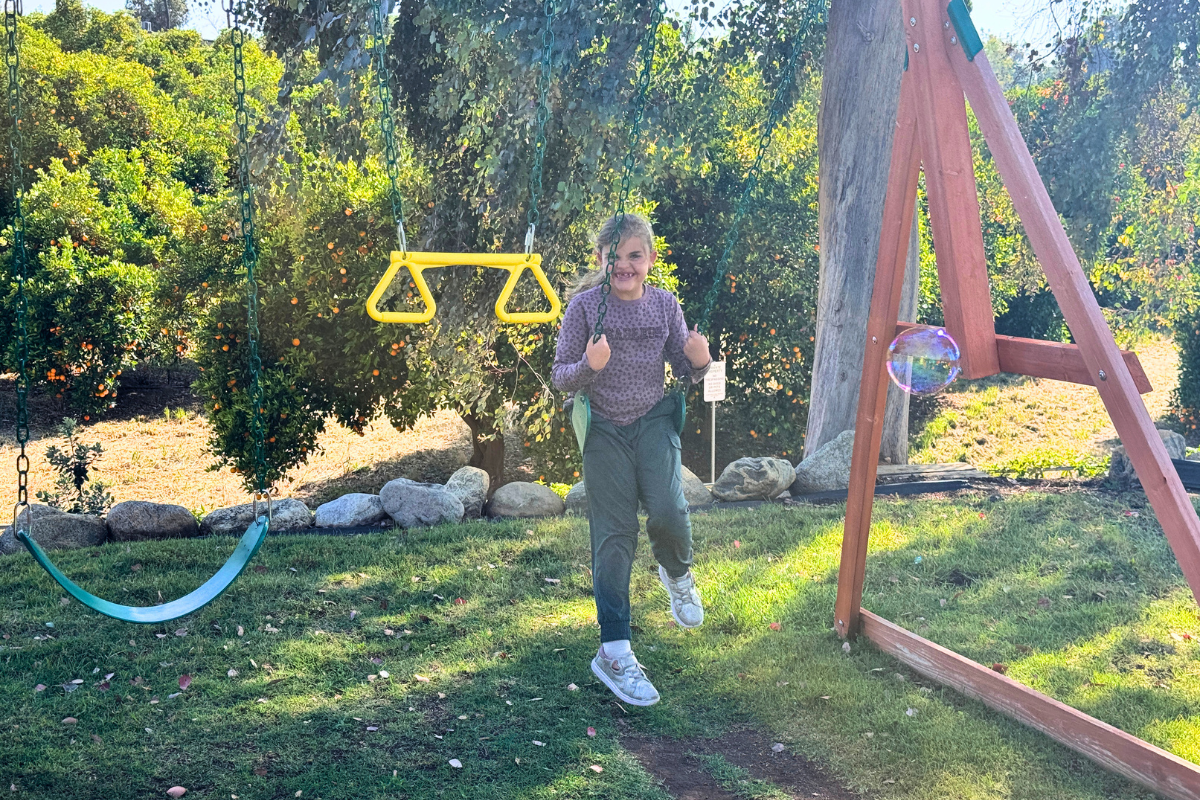
On a sunny spring day in Redlands, Eleanor plays on her swing set in the backyard, laughing at bubbles — skills her parents are working urgently to protect.
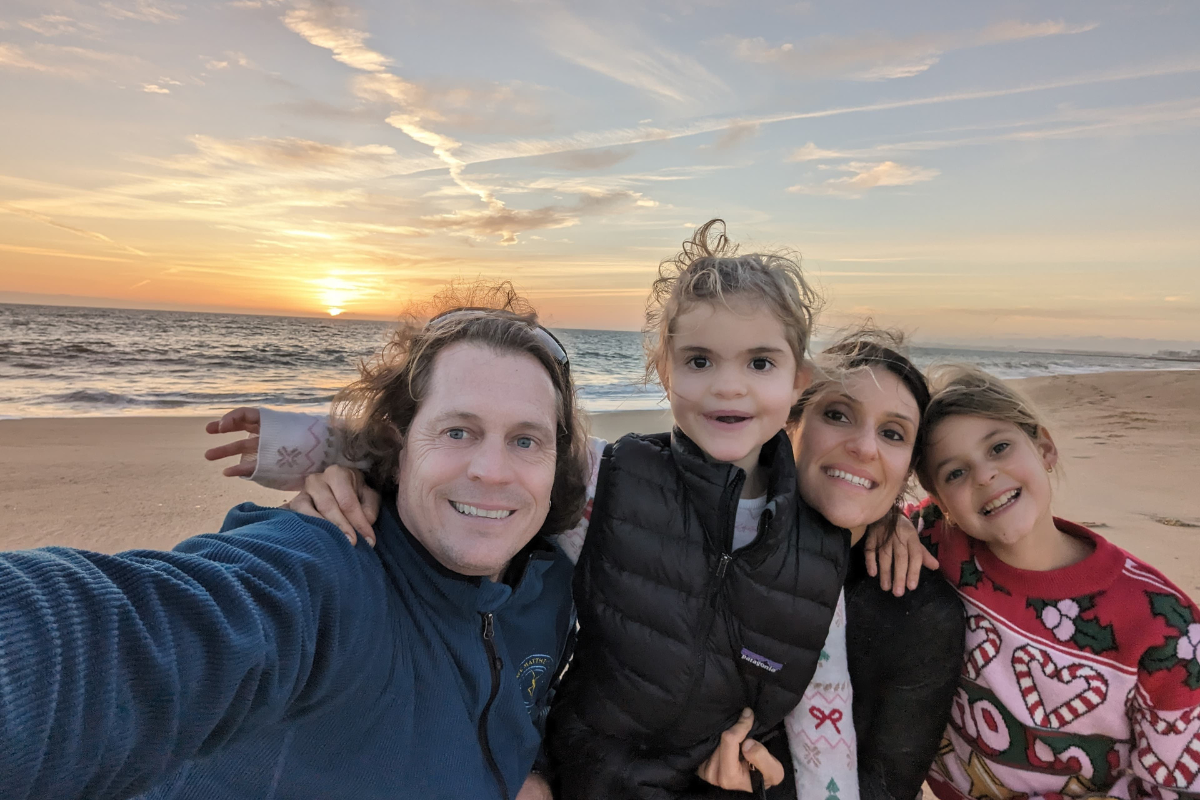
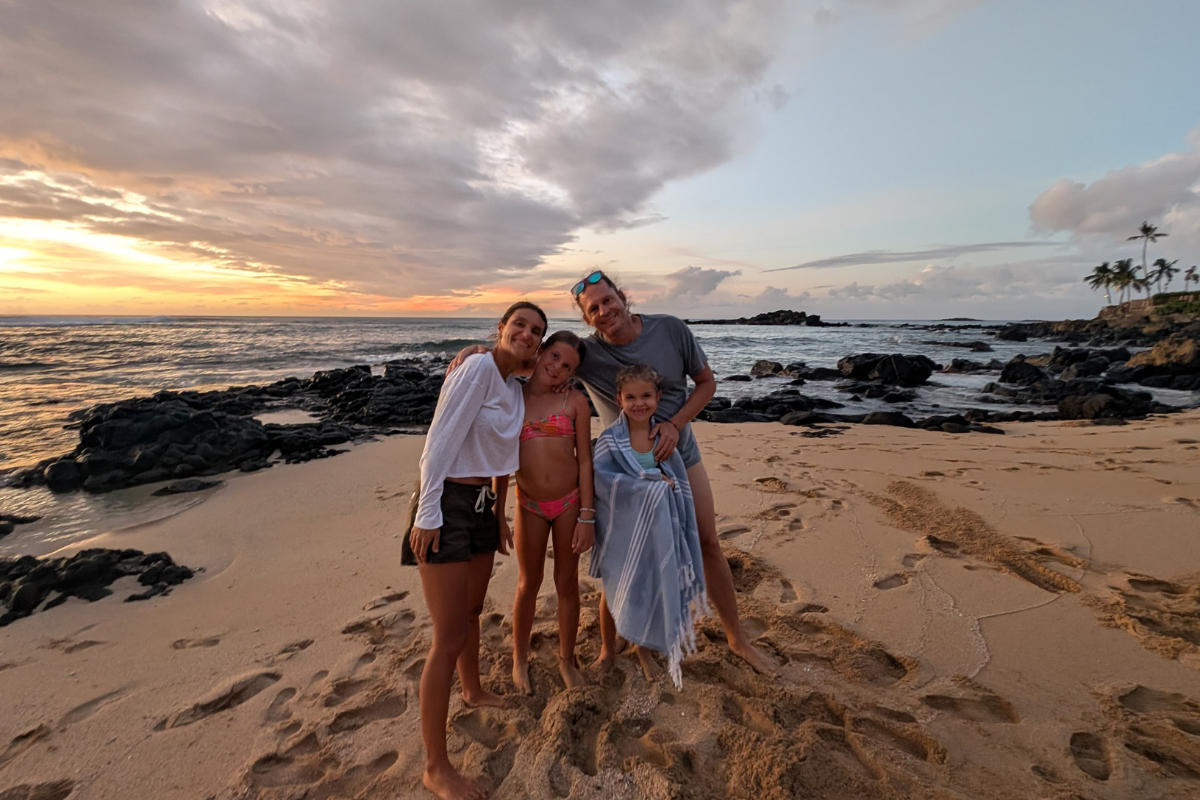
Pure, innocent and open are the words Mason Harrell and Rossella Leonardi use to describe their 8-year-old daughter.
Eleanor approaches the world with a sense of curiosity, not limited by fear.
“She just loves coming up and saying, ‘What’s your name?’” her father, Mason Harrell, said. “She’s super social. She can go to whoever and ask questions.”

But she also faces challenges that most kids do not.
Eleanor, a second grader at Mariposa Elementary School in Redlands, was born with a rare genetic condition known as Kleefstra syndrome. The genetic disorder is caused by a deletion of the EHMT1 gene on chromosome 9.
When Eleanor was a baby, the diagnosis unfolded over months, with her parents facing uncertainty about what it meant for their daughter’s future.
“She was a floppy baby,” Mason said. “She couldn’t push her head up… and then she started missing milestones.”
Mason and Rossella said they had their suspicions something was different. Testing would later confirm the genetic issue.
The condition can lead to developmental delays, intellectual disability, and seizures. Some people with Kleefstra syndrome also face cardiovascular defects and other organ abnormalities.
More concerning, some children with Kleefstra syndrome face regression as they reach adolescence. In other words, the skills they learned early in life, like walking and talking, can be lost.

Like many parents navigating a rare disease, Mason and Rossella found themselves in a space that was both unfamiliar and isolating. At the time of Eleanor's diagnosis, there were only about 100 known cases in the United States and almost no guidance.
“You feel lost, basically,” Rossella said. “There is nothing. No one can tell you, ‘If you do this, she’s going to do that.’”
So in the face of mounting uncertainty, they built something.
After traveling to Amsterdam to meet the doctor who identified the syndrome, the couple helped launch IDefine. The nonprofit is dedicated to advancing research and connecting families affected by Kleefstra syndrome.
Five years later, the organization has helped establish a Kleefstra clinic at Boston Children's Hospital, cell lines, organoids, and mouse models for lab research, along with an ongoing natural history study.
The organization has helped identify more than 600 diagnosed cases in the U.S. However, the frequency of the genetic disorder is difficult to determine because many cases go undiagnosed, according to researchers.
“We’ve established all the scientific foundation… to be able to launch into real deep genetic research,” Mason said.
That research now focuses on two potential paths: correcting the faulty gene or boosting the function of the healthy one.
Early results could come within three years. A treatment, they hope, could be possible within five. But that progress comes at a cost of tens of millions of dollars.

For Eleanor, time carries a particular weight.
One of the most difficult aspects of Kleefstra syndrome is the risk of regression, often beginning around puberty. Children who have learned to speak, walk, or communicate can lose those abilities.
When Eleanor was a baby, Rossella and Mason said they did not know how severe the impacts would be or if she would ever walk or talk.
“We did all the therapy possible, like hippotherapy, water therapy, music therapy… and the regular physical, speech and occupational therapy,” Rossella said.
And it worked. Her parents describe her as a “superstar” at school, and the extra support she needs has become a regular part of their lives.
Now the family is facing a new set of uncertainties about what the future holds.
“There is a possibility that she might lose that,” Rossella said. “It’s really heartbreaking.”
The urgency became more real in December, when Eleanor experienced her first seizure that lasted 45 minutes.
“Seeing her like that… the reality sinks in,” Mason said. “This terrible risk of losing the ability to talk, walk, and be responsive.”
Her parents estimate that the window before potential regression is about five years.
“I just want to make sure we develop the treatment before Eleanor regresses, if she does,” Mason said.
At the same time, their goal is not to change who she is.
“The way I see Eleanor right now — I don’t want to change her,” he said. “She’s happy… what’s wrong with her?”
But if her abilities begin to slip, he said, “I want treatment. No matter what.”

To help fund that future, the family is turning to something joyful: a community concert.
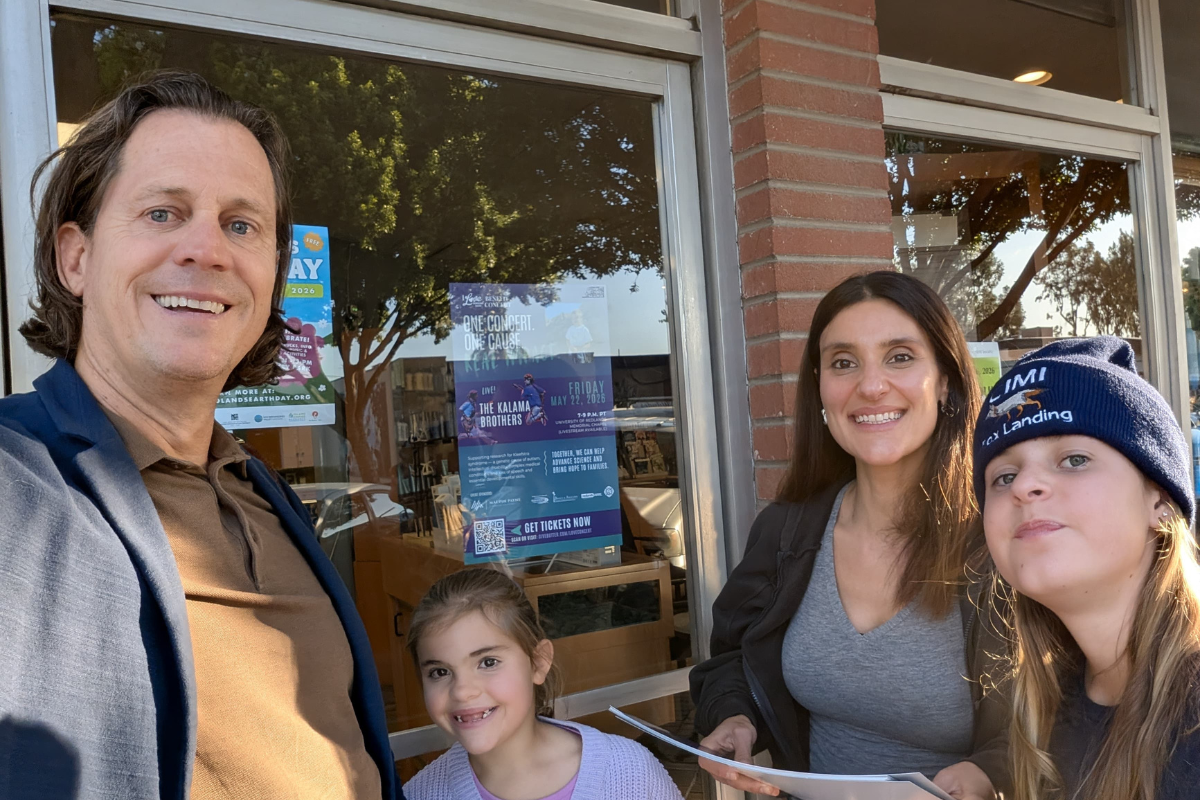
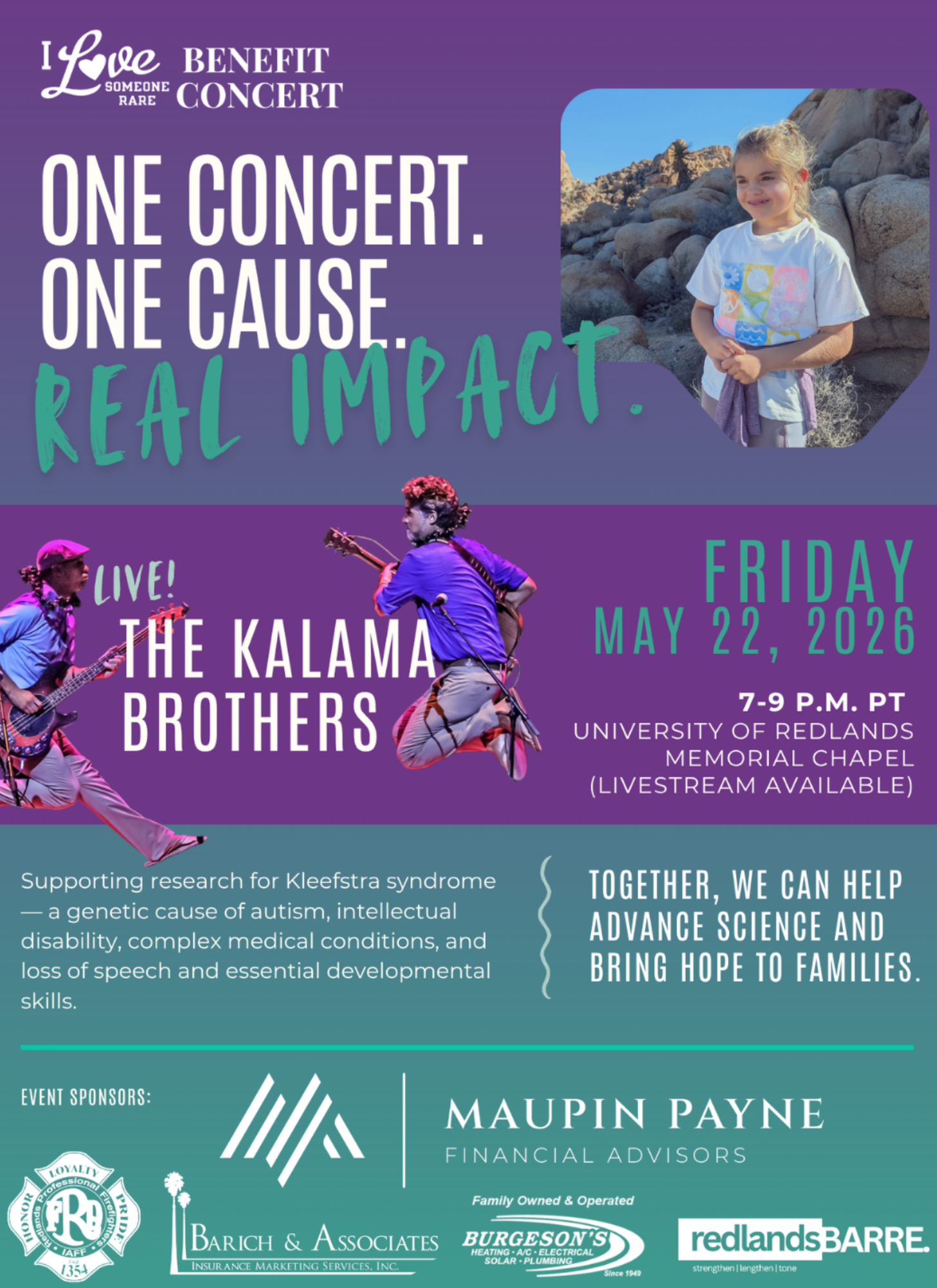
The “I Love Someone Rare” benefit concert is scheduled for May 22 at the University of Redlands.
The event will feature the Kalama Brothers, known for their Hawaiian and Polynesian music and performances with Disney’s “Moana Live.”
Ryan Kalama, one of the brothers, is a close family friend. He and Mason went to Redlands High School together, where they sang in choir.
The most anticipated moment of the evening may come from Eleanor herself.
She and her classmates will perform songs from Moana and Eleanor will take the stage for a solo. Her 11 year old sister, Celine, is also expected to be by her side.
“It’s rough and tough for her to speak… and the song is really fast,” Mason said holding back tears. “I get teary-eyed just imagining her.”
All proceeds from the concert will go directly to support genetic research for Kleefstra syndrome.
For Mason and Rossella, Eleanor has changed more than their daily routines. She has reshaped how they understand life itself.
“It’s kind of like being with somebody that is holy or sacred and has taught me so much,” Mason said.
It’s also the inspiration behind the concert’s name.
“What Eleanor has shown, or continues to show me, is that I’m a rare person. I’m unique,” Mason said. “Loving someone rare starts with loving yourself.”
For now, Eleanor is still the girl who loves bubbles and asking strangers their names.
She is, in her parents’ words, “pure joy.”
And as they work to secure her future, they hold tightly to the present and to the version of Eleanor who is already, in every sense, enough.
Friday, May 22
7 - 9 p.m.
University of Redlands Memorial Chapel
Ticket information and donations here

Sign up for our weekly newsletter