


University of Redlands hosts second annual banned books event
Librarians, authors and community members discuss growing challenges to books and the importance of protecting access to literature.

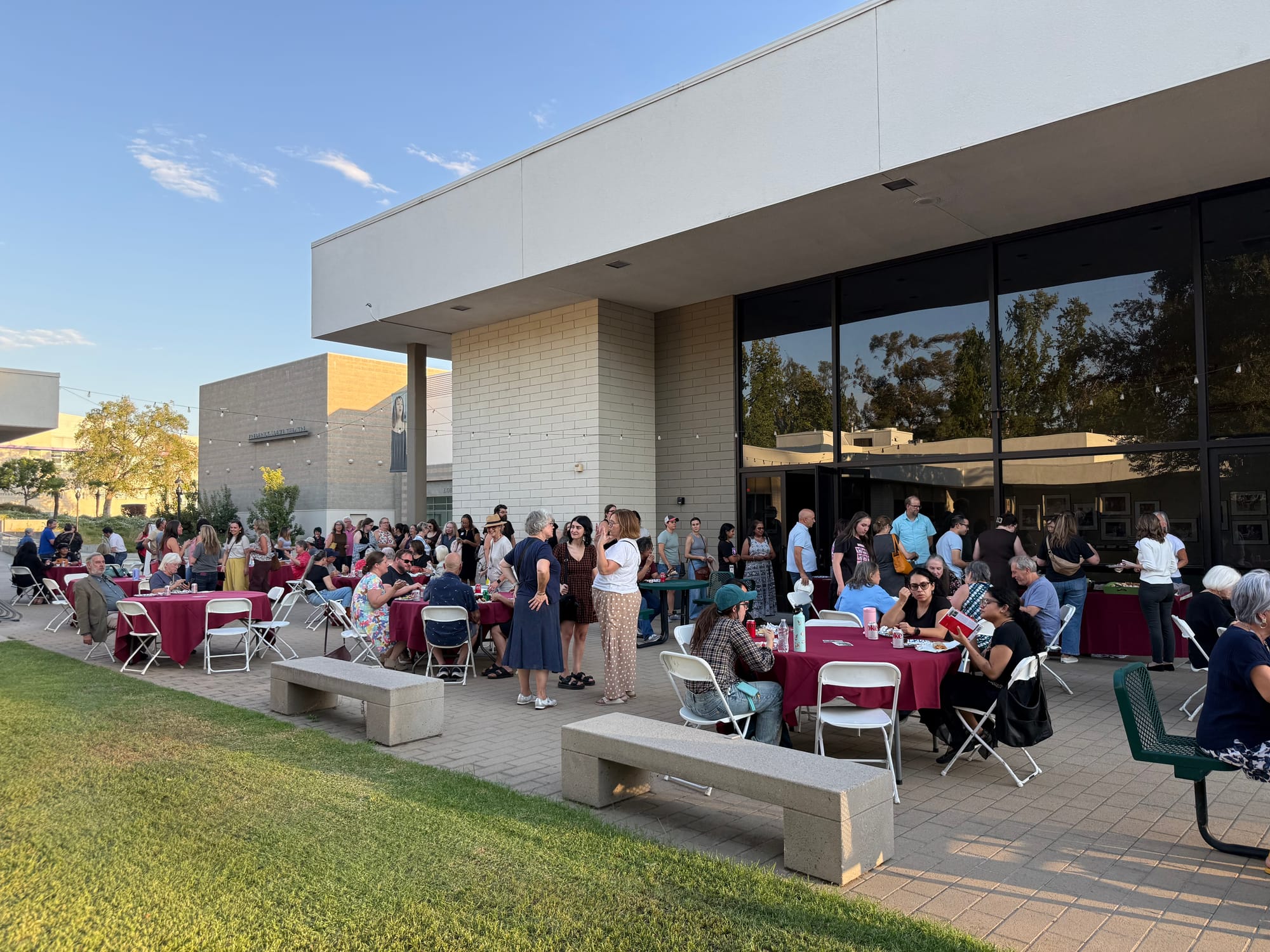
Nearly 200 people attended the second annual banned books event at the Glenn Wallichs Theatre at the University of Redlands, where guests enjoyed a free dinner provided by Cuca's.
The event, celebrating the freedom to read, was sponsored by Sigma Tau Delta Honor Society, Armacost Library and local nonprofit Together for Redlands.
During the previous school year, several books became the subject of controversial restrictions and removals in the Redlands Unified School District.
“Book bans and challenges have increased since the last time we did [this event],” said Heather King, an English professor at the university. “2025 saw more bans than any year previously recorded with over 11,000 bans and challenges targeting over 7,000 unique titles [nationally].”
She added, “92% of those bans were brought on by political groups, not by parents.”
Speaking about establishing an annual tradition, King said, “If you do it once, it’s a good event. But if you do it a second time, it’s the start of a partnership and I’m really excited about that.”
“Book banning affects everybody,” King said. “I think freedom of speech and expression is a central value of our democracy that everyone should get behind. I think it’s a neutral political position.”
Attendees watched “The Librarians,” a documentary about librarians who have been targeted and received death threats amid book-banning efforts in recent years, beginning in Texas and Florida.
After the screening, two university students moderated a panel discussion. University librarian Shannon Simpson, public school librarian Jenann Elias and Erin Rivera, owner of local bookstore The Frugal Frigate, returned as panelists for the second year.
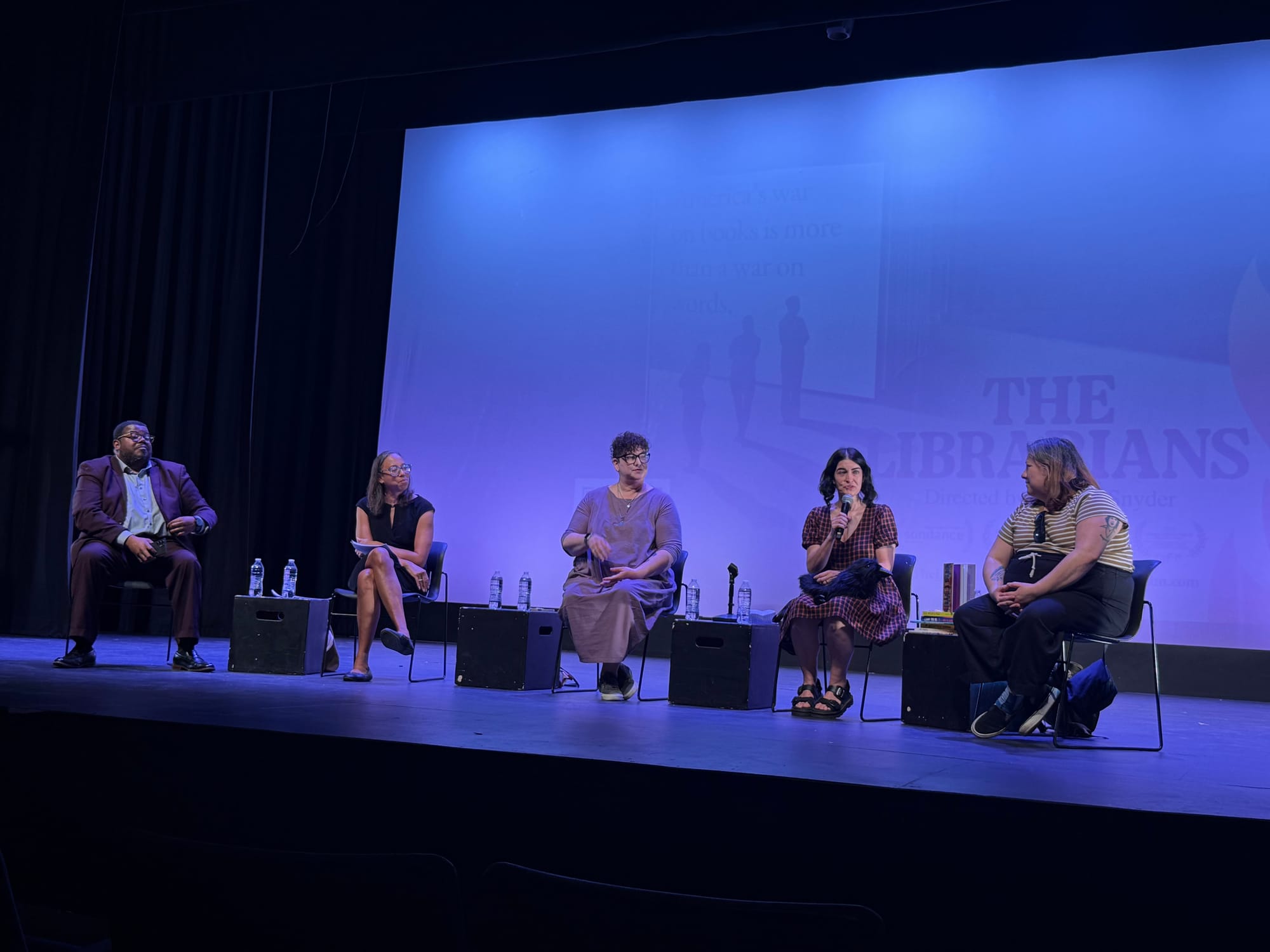
Dean of Students and Belonging James Jackson, a lawyer, and local author Isabel Quintero joined the panel for the first time.
“We all have collection policies which give us guidelines of what we can select,” Elias said, explaining how school librarians choose age-appropriate books using resources such as School Library Journal.
Elias recently moved from the Redlands Unified School District to the San Bernardino school district.
“Recently, it’s gotten tougher for ordering books in Redlands,” she said. “Now, things are running through an AI program that decides whether or not the book might have questionable content.”
She added, “It’s compliance in advance.”
“And that is keeping great books out of the hands of our kids,” Elias said. “Which in the end of the day is what is important. We want our kids to be represented and seen.”
Quintero has had several of her books banned, including “Gabi, a Girl in Pieces,” a young adult novel that has faced challenges over its depiction of sexual experiences.
“It’s not pornographic,” she said. “It’s actually pretty funny.”
“Contrary to what people believe, I don’t make a lot of money when my books get banned,” Quintero said. “We stopped getting invited to schools, to book festivals, to library visits and cultural centers. All of that is gone.”
She added, “That’s happened to a lot of writers that I know.”
Addressing the effects of restricting access to books, university librarian Simpson said, “Students having less and less access to this, means they are not engaging with reading.”
She added, “I see it at the college level, the lack of interest and comprehension.”
Speaking about her experience working in public school libraries, Elias said, “I have no evidence that [books] are hurting [our students], I do have evidence that it’s helping.”
She said middle school students today are particularly interested in true crime books.
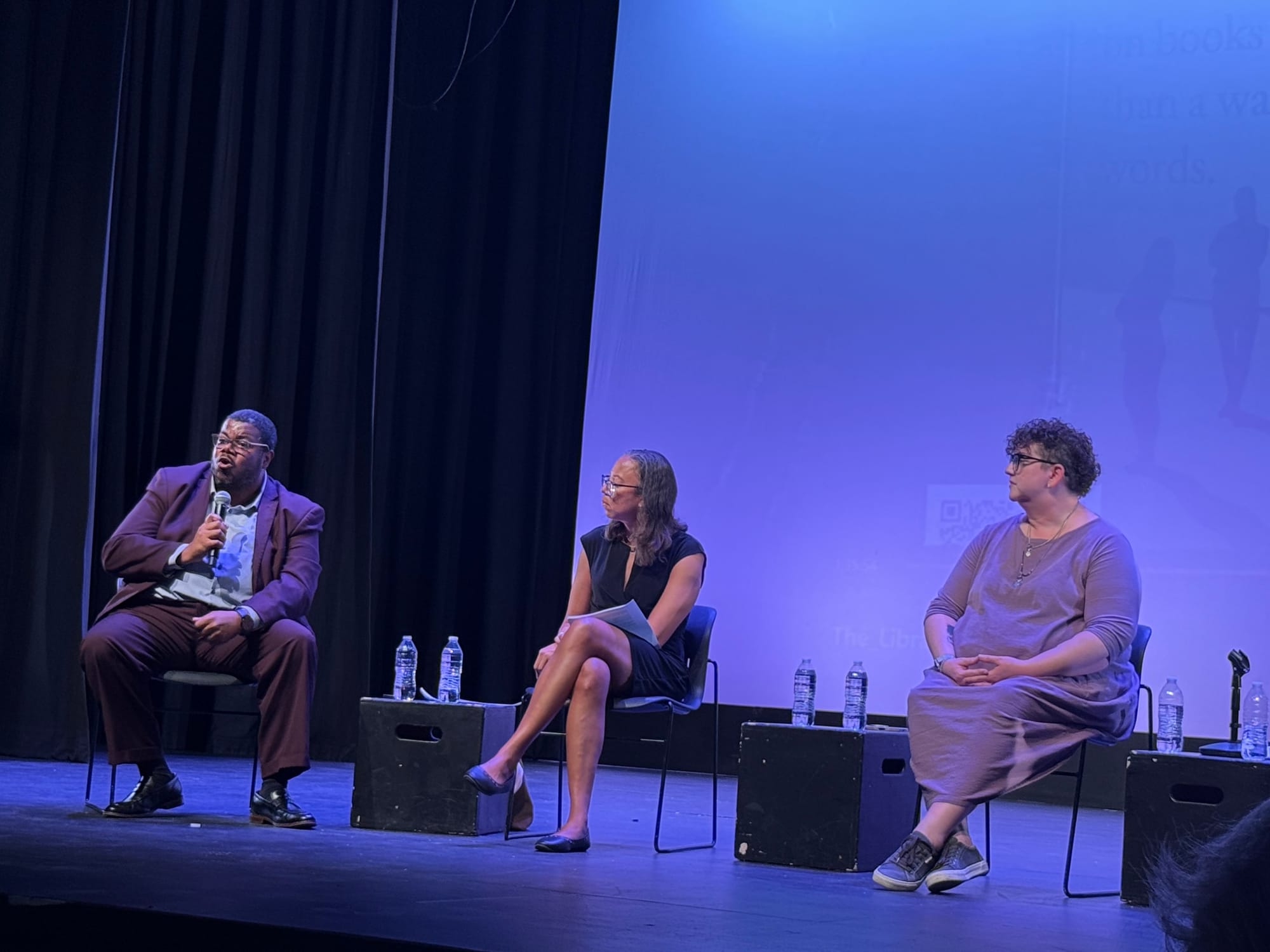
Jackson addressed what he described as an undermining of professional expertise and what could be done about it.
“What we saw from the film,” he said. “We have to mobilize […] We must continue to fight to maintain freedom of speech.”
King closed the event by thanking the audience for coming and taking time “to think about questions that affect all of us and the shape of our democracy moving forward.”
Trisha Keeling, director of Together for Redlands, summed up the evening.
“It’s about bringing our community together to learn, talk and reaffirm something very important; the freedom to read belongs to all of us.”
“I loved getting to see this, I admit I cried towards the end,” said Marit Hendrickson of Redlands. “It’s something I’ve struggled with our local school board and how far it’s fallen.”
“I was really impressed by and admired the librarian [in the documentary], her courage and the language she chose,” she said.
Sachi Pawodskar-Almeida, also of Redlands, agreed.
“People who have no experience should not be telling [librarians] what they should be doing,” she said. “It’s really tough to see librarians become scapegoats for what feels like a power-hungry type thing.”
Both Hendrickson and Pawodskar-Almeida said they looked forward to returning for next year's event.
