The 2026 State of the District highlighted rising graduation rates and new programs, but test scores remain below pre-pandemic levels as the district braces for financial cuts.
The 2026 State of the District highlighted rising graduation rates and new programs, but test scores remain below pre-pandemic levels as the district braces for financial cuts.
Redlands Unified School District Superintendent speaks at the third annual State of the District on Feb. 24. (Photo Courtesy Redlands Unified School District)
REDLANDS, Calif. — Redlands Unified School District leaders highlighted rising graduation rates, expanded academic programs and new facility upgrades during the district’s third annual State of the District address on Feb. 24, while acknowledging slower-than-hoped gains in student achievement and mounting budget pressures.
Superintendent Juan Cabral told roughly 130 attendees at Citrus Valley High School that the district’s graduation rate has climbed to 92%, up from 86% three years ago, and set a goal of reaching 94% this year.
“Each percentage point represents real students, real futures, and real opportunities,” Cabral said. He added that “improvement happens through intentional planning, focused instruction, targeted support, and shared accountability.”
Statewide, the graduation rate is 87.5%, with San Bernardino County at 87.8%, according to California Department of Education data cited by the district.
But while district leaders emphasized that “all of our metrics continue to go in the positive direction,” state test data show academic recovery remains uneven five years after pandemic disruptions.
Test scores show modest gains, remain below 2019 levels
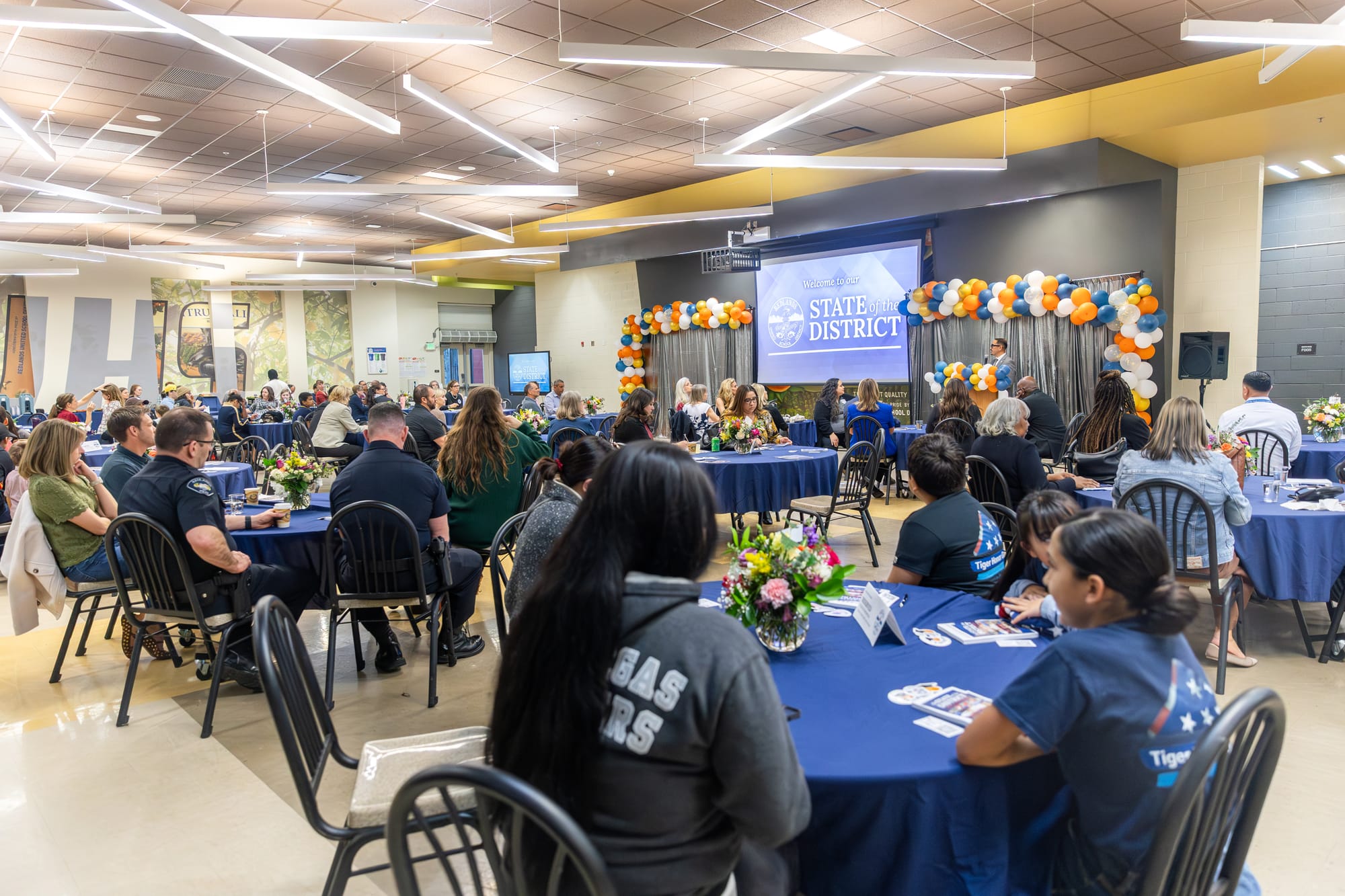
Students, families, staff, community members, and civic leaders listen to the superintendent’s address during the RUSD State of the District on Feb. 24, 2026 at Citrus Valley High School’s Blackhawk Bistro. (Photo Courtesy Redlands Unified School District)
In English language arts, 51.6% of students met or exceeded standards in 2025, compared with 57.4% in 2019. In math, 37.5% of students met standards, compared with 44% before the pandemic.
Cabral pointed to improvements in “points below standard,” a state metric that compares districts to statewide averages, noting Redlands Unified performs better than California overall in math.
Still, overall math proficiency has remained largely flat since 2023, prompting the board to prioritize middle school math intervention.
"The goal is to bring middle schools to the same points below standard that we have district wide and continue to be competitive statewide and with like districts," Cabral said.
The district has set a goal of increasing English and math proficiency by at least two percentage points this year.
Literacy, dual language and attendance initiatives
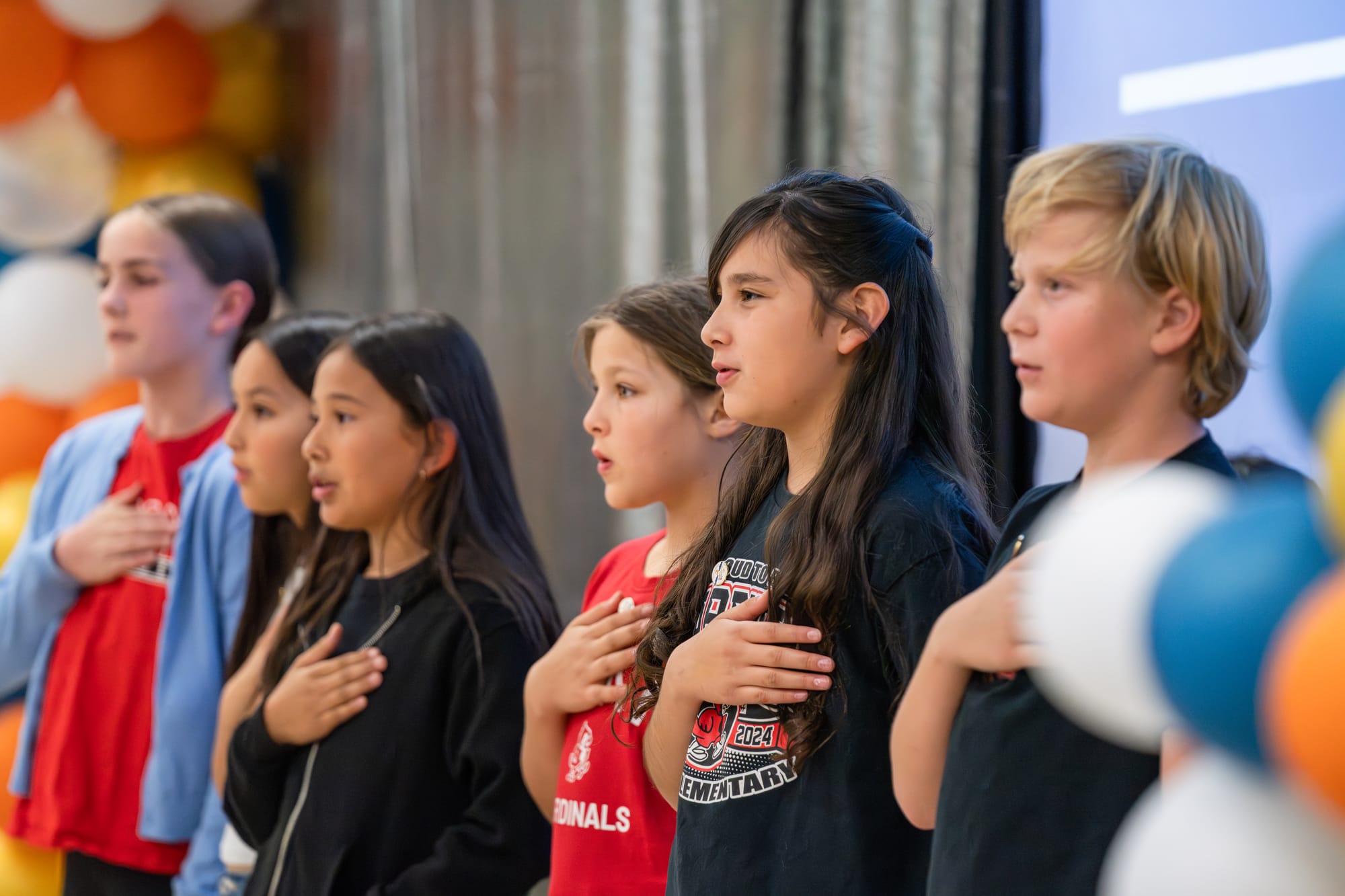
Members of the Cram Elementary School Student Council lead the Pledge of Allegiance at the RUSD State of the District on Feb. 24, 2026. (Photo Courtesy Redlands Unified School District)
These goals were discussed by the district's five board members in video messages played during the event.
The new dual-language immersion program will begin this fall at McKinley Elementary School after drawing strong interest from families.
Attendance has risen from 91% to about 93% over three years, Cabral said, though it remains below the district’s pre-pandemic rate of 96.5%.
The district aims to increase attendance to 95% this year. A 2024 change in state law (Senate Bill 153) eliminated the previous three-day minimum for claiming independent study attendance and expanded Short-Term Independent Study (STIS) to 15 days, allowing districts to count even a single day of independent study toward average daily attendance for funding purposes.
Under the updated rules, attendance can be recovered retroactively — a shift from the previous RISE program, which required families to arrange independent study in advance for absences of three to 15 days.
Victoria Elementary School’s Honor Guard unfolds the American flag at the RUSD State of the District on Feb. 24, 2026. (Photo Courtesy Redlands Unified School District)
Advanced placement and career pathways
Cabral also cited growth in advanced coursework and career technical education.
In 2025, 1,441 students took at least one Advanced Placement exam, with 81% earning a qualifying score — above the national average of about 70%, he said.
The number of students completing career technical education pathways rose to 549, an increase of 144 students from the previous year.
Measure D and facility upgrades
Voters approved the $500 million Measure D bond in November 2024 with 67% support, allowing the district to begin campus safety and modernization projects.
Planned upgrades include secure entry vestibules at middle schools, perimeter fencing, HVAC improvements and roofing repairs.
Budget challenges ahead
Cabral also acknowledged financial pressures tied to state funding constraints and the expiration of pandemic-era relief dollars.
“We are experiencing a very difficult time right now with respect to our budget … which is going to cause us to reduce positions,” he said.
The Redlands Unified board recently approved resolutions authorizing reductions of up to 138 positions for the 2026–27 school year, aimed at closing a projected $20 million structural deficit driven by enrollment declines, dropping attendance numbers, the expiration of one-time pandemic funds and and unexpected staffing costs related to the district’s Department of Justice stipulated judgment.
Most of the positions identified are student-facing, including counselors, nurses, librarians and special education staff. District officials said much of the district’s $74 million reserve is restricted, leaving about $8 million in flexible funds.
The district has not yet determined how many employees will receive layoff notices, as required analyses of seniority, credentials and vacancies are still underway. Final layoff decisions are expected March 10, with preliminary layoff notices required by March 15 under state law.
Looking ahead
Even as financial pressures loom, Cabral emphasized long-term strategic planning.
Cabral framed the district’s long-term focus around its newly adopted “Portrait of a Graduate,” known as EMPOWER, which outlines skills and attributes students should develop before graduating.
“Our goal,” he said, “is to ensure that students graduate with a plan.”
While district leaders celebrated gains in graduation rates and college- and career-readiness programs, academic proficiency levels and attendance rates suggest that full recovery from pandemic-era disruptions remains a work in progress.
District officials said they believe sustained intervention efforts will lead to stronger gains in coming years.
Students Shine at the State of the District
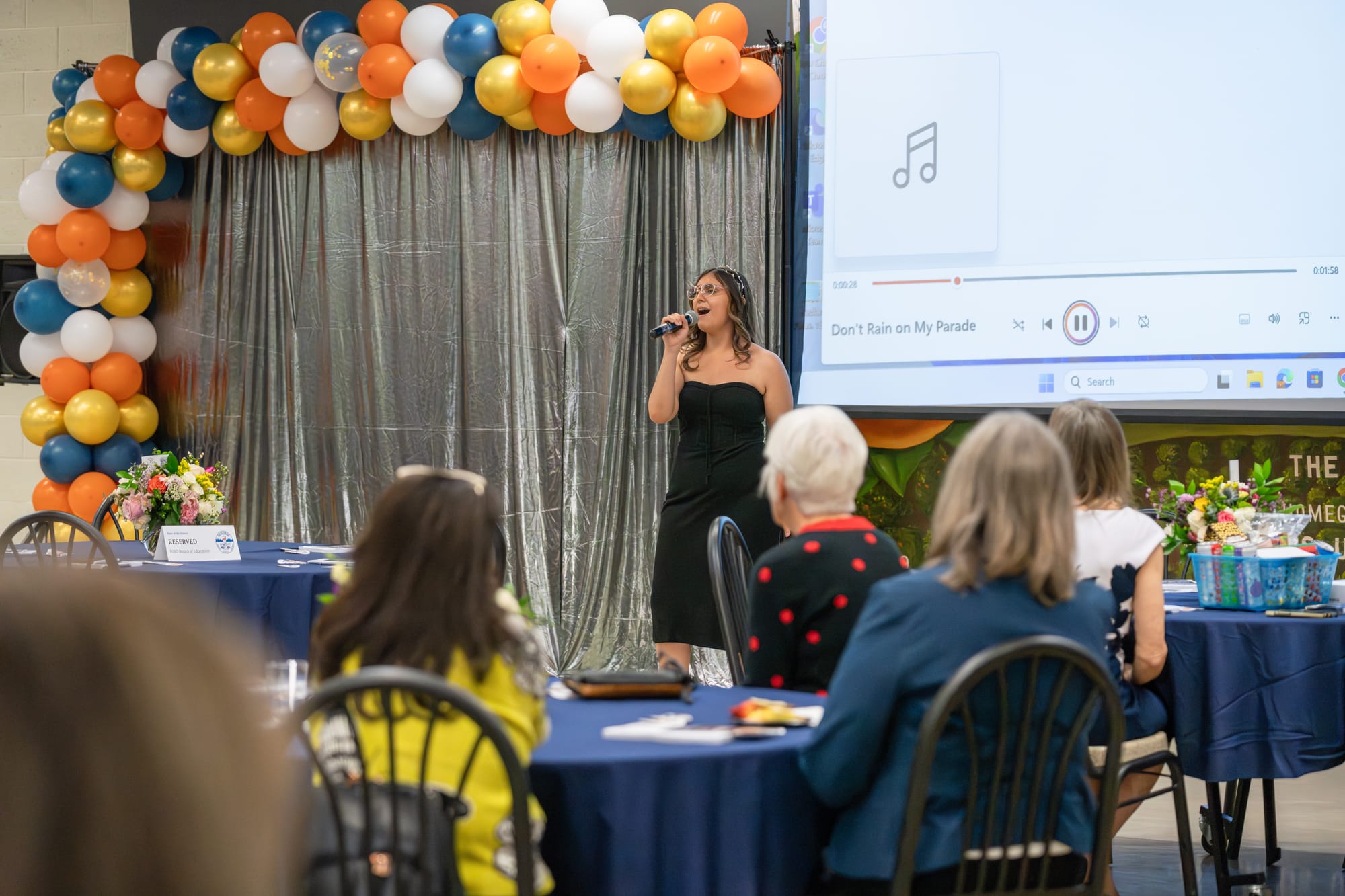
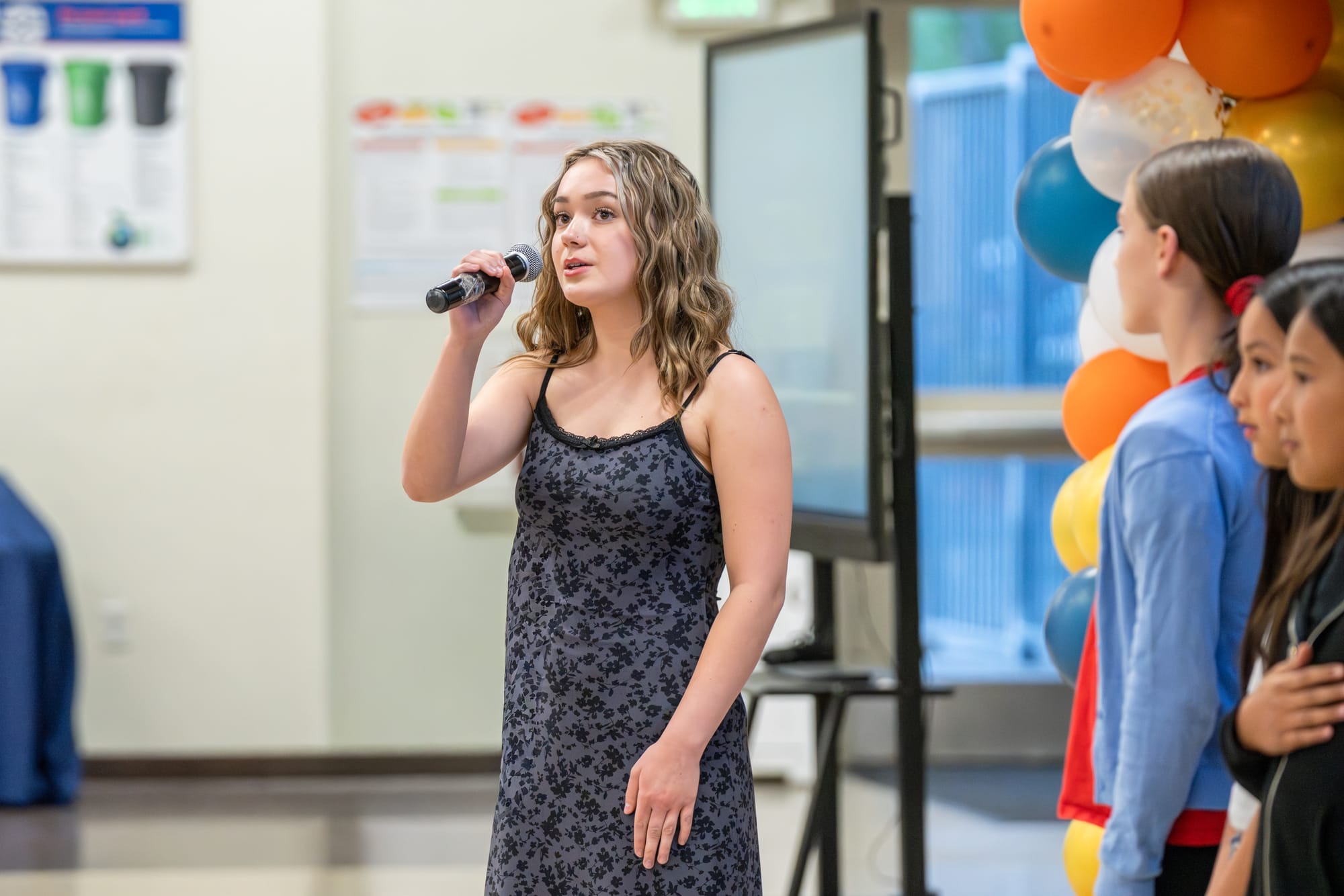
Student involvement was a highlight of the evening. The program opened with a performance of “Don’t Rain on My Parade” by Citrus Valley High School senior Samantha Vargas.
Victoria Elementary School’s Honor Guard presented the flag, followed by the National Anthem sung by CVHS junior Parker Holsonbake.
Members of the Cram Elementary School Student Council then led the Pledge of Allegiance.
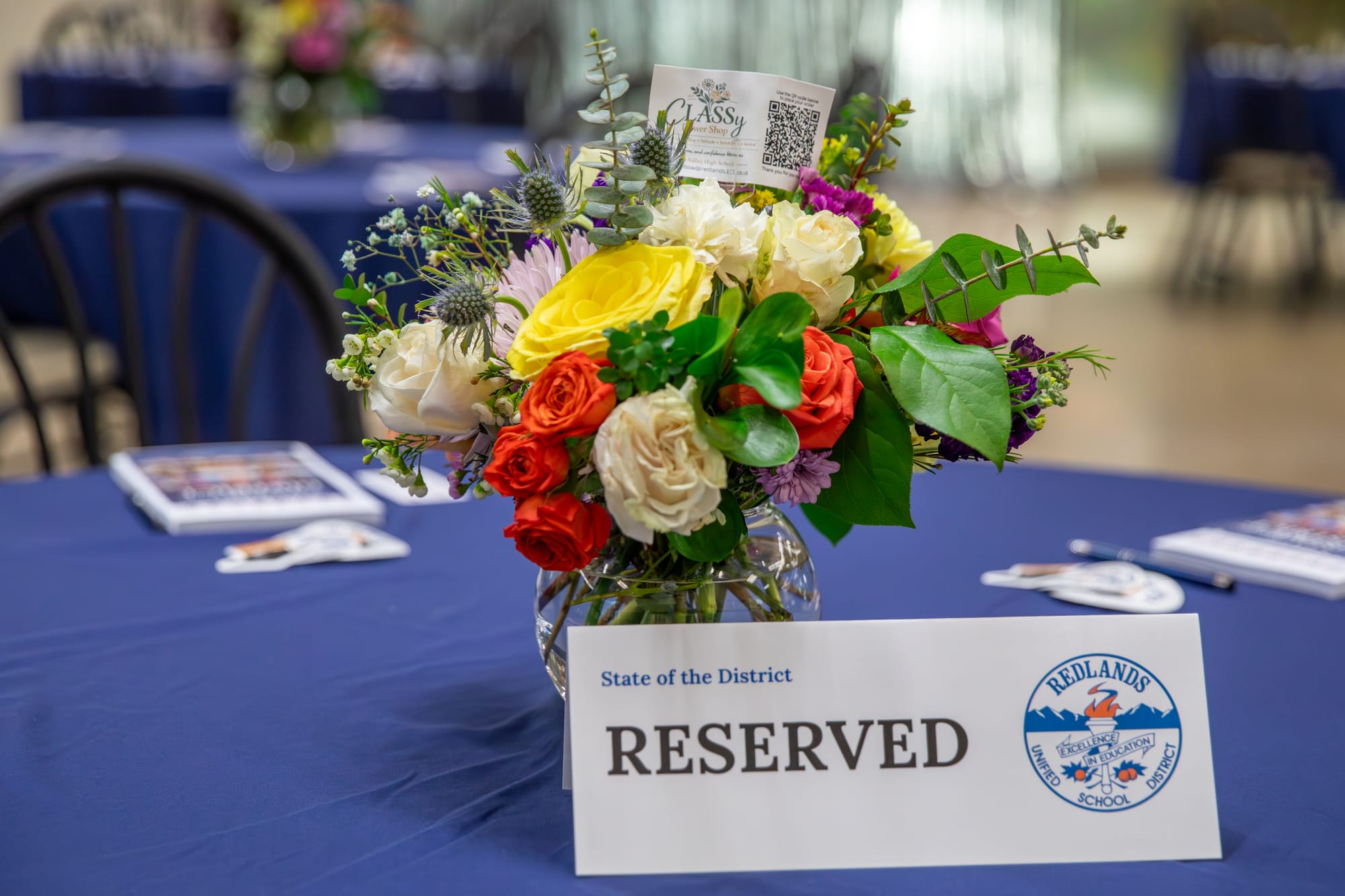
Floral centerpieces adorning each table were assembled by students in Jennifer Dillow’s special education adult transition program class at Citrus Valley High School.
The annual State of the District address is intended to outline progress and set priorities for the coming year.
Citrus Valley High School senior Samantha Vargas performs “Don’t Rain on My Parade” at the RUSD State of the District on Feb. 24, 2026. (Photo Courtesy Redlands Unified School District)Floral arrangements for the RUSD State of the District were made by Jennifer Dillow’s Citrus Valley High School adult transition program class – CLASSy Flower Shop. (Photo Courtesy Redlands Unified School District)Citrus Valley High School junior Parker Holsonbake sings the national anthem at the RUSD State of the District on Feb. 24, 2026. (Photo Courtesy Redlands Unified School District)
A former local TV news producer, Stephanie launched CFR in 2023. Originally from Michigan, she’s made Redlands home with her husband and three kids. When she’s not reporting, she’s problem-solving at the climbing gym or trying new local restaurants.